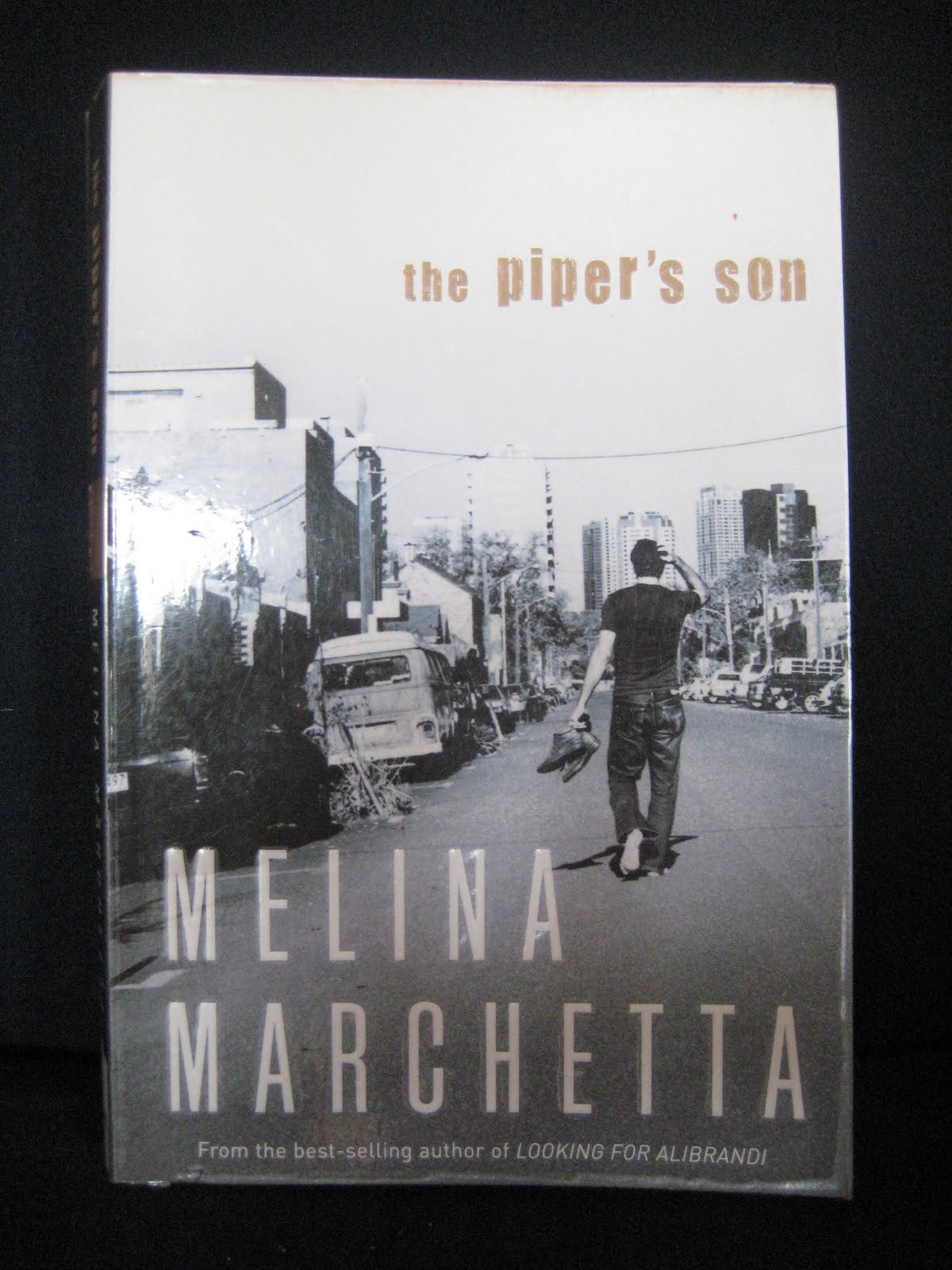
This is one of my favourite books so far this year. Very much in the style of Tim Winton or Craig Silvey’s Jasper Jones, the story is gorgeous, heartbreaking, engrossing, and you just wanted to take the characters home with you.
The novel is about three brothers, Joe, Miles and Harry, growing up before their time on the wild coast of Tasmania. Their mother died a few years previously in a car crash, and their father has become a bitter, heavy drinking man whose moods are mercurial as the sea on which he spends each day trying to make a living diving for abalone and crayfish.
Most of the book is told through the eyes of Miles and Harry as Joe had left home to live with his grandfather some time ago. For Miles there is no escape. Despite being in his early teens, Miles has to work on his father’s fishing boat working the air pump, cleaning the boat on its return and dealing with the cannery which he hates. Harry suffers from seasickness and so avoids the boat duties but that doesn’t mean he escapes his father’s bad temper. For Joe, this is the last school holidays he will spend with Miles and Harry for a while. His grandfather is dead and his house is being sold. At nineteen, Joe has decided to escape the small town where the family lives and where employment prospects are limited to the local cannery, to sail the boat he has built to adventure, but that doesn't mean it's an easy decision to leave his two brothers to the mercy of their father.
It all sounds very bleak but like many children who don’t have much, simple things give the boys some hope. Miles and Joe spend time surfing together and hanging out as brothers do. Harry receives a warm welcome at his best friend Stuart’s house with Stuart's mum giving him the softness missing from home, and things don’t feel so bad when Harry befriends the local recluse whom the other kids are scared of, but who listens to Harry’s problems with a sympathetic ear, and gives Harry the experiences that you get when you have a special relationship with an honorary uncle.
Life continues in this way, until one day everything changes, tragedy strikes, and a family secret is revealed.
Showing posts with label Australian authors. Show all posts
Monday, May 16, 2011
Sunday, October 17, 2010
Kindling by Darren Groth
This is a small book at 225 pages, but one that tells an important story. The main characters in the story are ten year old Kieran and his father, Nate. Kieran’s mother, Felicity, died tragically in a house fire five years before while trying to save Kieran and there is a mystery surrounding the circumstances of her death. Nate is a talented musician, and at the time of Felicity’s death, he and his band had just got their big break with one of their songs rising up the music charts. Nate spent his days travelling with his band, giving interviews and generally enjoying the life of an up and coming band, but that is all in the past now as Nate has taken over the parenting role – one with more than the usual challenges as Kieran has autism.
The story starts with Nate and Kieran on a typical weekend afternoon for many families – getting together with their friends for a barbeque. In the distance, a bush fire on a far hillside is threatening houses in the next suburb, and everyone, including Kieran, has been listening to the media for reports on its progress. Then, Nate can’t find Kieran. Where has he gone and why? Did he hear is father talking to his friends about the secret Nate has been shielding Keiran from for the last five years? This is not simply a case of a missing child. Kieran’s autism means that he doesn’t behave like other children would and his view of the world is one which is very different. Will Nate lose Kieran to fire after all?
What makes this book special is that it is told through two voices – that of Nate coming to grips with the challenges of being the father of a child with autism, and Kieran, whose voice gives us wonderful insights into how people with autism are “wired differently” (as the author says in the book). Darren Groth has impeccable credentials for writing about a child with autism – his own son has autism and Kieran is a combination of the children he has been around for many years. I particularly loved how the voice of Kieran puzzles over some of the statements his father makes. For example, when being told he is not allowed out on the deck without an adult, he thinks:
The story starts with Nate and Kieran on a typical weekend afternoon for many families – getting together with their friends for a barbeque. In the distance, a bush fire on a far hillside is threatening houses in the next suburb, and everyone, including Kieran, has been listening to the media for reports on its progress. Then, Nate can’t find Kieran. Where has he gone and why? Did he hear is father talking to his friends about the secret Nate has been shielding Keiran from for the last five years? This is not simply a case of a missing child. Kieran’s autism means that he doesn’t behave like other children would and his view of the world is one which is very different. Will Nate lose Kieran to fire after all?
What makes this book special is that it is told through two voices – that of Nate coming to grips with the challenges of being the father of a child with autism, and Kieran, whose voice gives us wonderful insights into how people with autism are “wired differently” (as the author says in the book). Darren Groth has impeccable credentials for writing about a child with autism – his own son has autism and Kieran is a combination of the children he has been around for many years. I particularly loved how the voice of Kieran puzzles over some of the statements his father makes. For example, when being told he is not allowed out on the deck without an adult, he thinks:
“I don’t know why Dad says this because I don’t want to act like “a bloody stuntman”.This is a wonderful story, beautifully written and thought provoking, and made me feel that I just had to keep reading to find how Nate and Kieran’s story ended. It sensitively explores the challenges and rewards of parenting a child with autism and helps foster our empathy with people who are different from us, generally giving the reader a greater appreciation for the world of autism. Highly recommended and one for book clubs to consider, the book contains reading group notes at the end.
Monday, October 11, 2010
Bereft - Chris Womersley
If you like fiction with a historical basis, a bit of mystery and good outwitting evil then this may be a book for you. I picked this book up having read some good reviews in the media and quite liking the blurb on the back cover. I have to say, I thoroughly enjoyed it.
This is Chris Womersley’s second novel and is set at the end of the first world war with the Australian soldiers returning home from Europe to a very different Australia. The Spanish Influenza was sweeping the world and while Australia was somewhat protected from the severity of it’s effects, it still caused a large number of deaths, and had everyone acting with suspicion – state borders were closed, train travel restricted, and people suspected of being infected were quarantined.
The main character, Quinn, is introduced to us travelling home to country NSW after fighting in the war. Quinn has a past – he fled his home town at the age of 16 after being found next to his dead sister with blood on his clothes and a knife in his hand – a sign of guilt in his father’s eyes as well as the rest of the town. Ten years later, he is heading home to clear his name and make sure the murderer of his beloved sister is made to pay. He stays clear of the town so he won’t be recognised, but after almost being discovered by his uncle, is rescued and befriended by Sadie, a young teenager living in the bush after her mother dies of the influenza. She is sure that her brother will return from the war to look after her, protecting her from the menace lurking in the town and saving her from being sent to an orphanage. Sadie is the same age as Quinn’s sister when she died, and her presence gives the novel a slight feel of karma and the story being retold but with a different ending.
The reader is taken on a journey, firstly meeting Quinn’s mother, who is very sick and quarantined to the family home, her husband talking to her through the window of the house. Quinn’s relationship with his mother on his return shows him as a sensitive soul, at odds with the crime with which he is accused. Then, there’s Quinn’s Uncle Dalton who is not all that he seems, and, finally Quinn’s relationship with Sadie – who Quinn is trying to protect from the past happening again. Sadie also seems to know more about what happened to Quinn's sister than she should - coincidence or the presence of the spirit world? I will let you be the judge.
I was fascinated with the descriptions of Quinn’s battle with what we would now call post traumatic stress syndrome and his precarious grasp of the present that got weaker as the novel continued. Often Quinn became confused between what was the present and the past and the reader is carried along on his hallucinations.
For me, the novel, also highlighted the freedom that children had in the past. Sadie’s confidence at living in the bush and her ingenuity and resourcefulness is something I wish my children had, but which seems to have been lost as a skill.
A wonderful tale of despair and anguish but also hope and redemption, Bereft was an unexpected hit with me.
This is Chris Womersley’s second novel and is set at the end of the first world war with the Australian soldiers returning home from Europe to a very different Australia. The Spanish Influenza was sweeping the world and while Australia was somewhat protected from the severity of it’s effects, it still caused a large number of deaths, and had everyone acting with suspicion – state borders were closed, train travel restricted, and people suspected of being infected were quarantined.
The main character, Quinn, is introduced to us travelling home to country NSW after fighting in the war. Quinn has a past – he fled his home town at the age of 16 after being found next to his dead sister with blood on his clothes and a knife in his hand – a sign of guilt in his father’s eyes as well as the rest of the town. Ten years later, he is heading home to clear his name and make sure the murderer of his beloved sister is made to pay. He stays clear of the town so he won’t be recognised, but after almost being discovered by his uncle, is rescued and befriended by Sadie, a young teenager living in the bush after her mother dies of the influenza. She is sure that her brother will return from the war to look after her, protecting her from the menace lurking in the town and saving her from being sent to an orphanage. Sadie is the same age as Quinn’s sister when she died, and her presence gives the novel a slight feel of karma and the story being retold but with a different ending.
The reader is taken on a journey, firstly meeting Quinn’s mother, who is very sick and quarantined to the family home, her husband talking to her through the window of the house. Quinn’s relationship with his mother on his return shows him as a sensitive soul, at odds with the crime with which he is accused. Then, there’s Quinn’s Uncle Dalton who is not all that he seems, and, finally Quinn’s relationship with Sadie – who Quinn is trying to protect from the past happening again. Sadie also seems to know more about what happened to Quinn's sister than she should - coincidence or the presence of the spirit world? I will let you be the judge.
I was fascinated with the descriptions of Quinn’s battle with what we would now call post traumatic stress syndrome and his precarious grasp of the present that got weaker as the novel continued. Often Quinn became confused between what was the present and the past and the reader is carried along on his hallucinations.
For me, the novel, also highlighted the freedom that children had in the past. Sadie’s confidence at living in the bush and her ingenuity and resourcefulness is something I wish my children had, but which seems to have been lost as a skill.
A wonderful tale of despair and anguish but also hope and redemption, Bereft was an unexpected hit with me.
Labels:
Australian authors,
Bereft,
Chris Womersley,
Mystery,
World War I
Monday, April 19, 2010
The Piper’s Son by Melina Marchetta
Most of us who live in Australia have heard about the film Looking for Alibrandi which was released in 2002. Some will know that it is based on the debut book of the same name by Melina Marchetta. I have thought about watching the movie or reading the book a number of times over the years but never quite got around to it as I thought it was one for teenagers and an “Australian” story, and thus probably a bit twee in the way of The Castle and other such films. This year I have been reading a blog called Persnickety Snark as a way to find out more about Young Adult fiction, and Adele who writes it is a big fan of Melina Marchetta. Influenced by this and the appearance of Melina’s latest book, The Piper’s Son, in the bookshops I thought I would finally read one of her novels. In fact, I have now read two – Saving Francesca which introduces the characters that appear in The Piper’s Son, and then The Piper’s Son. I was so impressed.
In The Piper’s Son, I felt the confusion and despair of the main character Tom Mackee, who is in his early 20’s and is struggling to deal with the effect his uncle’s death two years previously has had on his family. While technically an adult, he has the life experience of a child, and resorts to drugs to cope with his world falling apart. Dominic, Tom’s father, can’t handle his brother’s death and uses alcohol to prop himself up to the point where Tom’s mother takes his younger sister interstate until his father can get his act together. Just when his father should have been looking after Tom, Tom was expected to look after his father without the help of his mother, and he is angry at the desertion by these people on whom he should be able to lean on in these tough times. Compounding this is his relationship with the girl he loves, but whom he let down and didn’t have the confidence to explain to her why, pushing her away when he should be gathering her close. The story has a strong theme of friendship and how important it is when times are tough, as Tom’s friends from High School stand by him even when he isn’t someone you’d want to know.
Do you sometimes feel a little sad when reach the last word of the last page of a book you didn't want to finish? That is how I felt when I finished The Piper's Son, I wanted more. If you haven’t read Melina Marchetta’s books, don’t be put off by the Young Adult label. The Piper’s Son is a great read for any age (maybe not your grandmother, as some themes may be a little out there for her).
Sunday, February 28, 2010
Alex Miller's "Lovesong"
You're sure to have seen Alex Miller's latest book in the bookstores over the last few months, and it's been featured in the State Library of Victoria's The Summer Read programme for this year. Maybe some of you have tried it, while others have been put off by Miller's "literary" label having won two Miles Franklin Awards - in 1993 for The Ancestor Game and in 2004 for Journey to the Stone Country. I have to say that I have put off reading Lovesong to date because I found The Ancestor Game quite a hard read although I did ponder on the story for quite some time after I had finished. I was expecting Lovesong to be in the same vein and was waiting until I felt up to reading it. After finishing the book yesterday, I am both happy and sad. Happy that Lovesong was a much easier read and thus will appeal to a broader audience and it is a "nice" read, the story flowing along effortlessly, But I am sad in that I didn't have the same sense of dwelling on and interpreting the story as I had when I finished The Ancestor Game.
The novel starts in Melbourne where the narrator, Ken, strikes up a friendship with Australian born John, whose Tunisian wife, Sabiha, runs a local bakery selling the pastries of her homeland. During their meetings for coffee, John tells Ken the story of how he and his wife ended up living in Melbourne, and Ken, a well known author, can see the outline of his last book in John's story. John is backpacking through Europe, catches the wrong train in Paris, and ends up at the Tunisian cafe run by Sabiha's aunt. John And Sabiha marry and establish their life together running the cafe after Sabiha's aunt dies.
Monday, February 15, 2010
2009 Indie Book of the Year - Jasper Jones by Craig Silvey
You may remember from one of my January posts that I was going to read "Jasper Jones" by Craig Silvey after really enjoying his earlier book, "Rhubarb". Well, I completed it this morning. Firstly, a little synopsis of the story. Set in the 1960's in a small town in Western Australia, the story is told by 13 year old Charlie whose father teaches at the local secondary college and his mother struggles to live in a community so different from the world of wealth in which she grew up. One hot summer night, Charlie is awoken by a tap at his window. It is Jasper Jones - the town outcast, the boy that all parents warn their children about hanging out with, and who is a year older than Charlie. "I need your help" says Jasper and intrigued Charlie goes with Jasper to his secret place where Jasper has made a horrible discovery. Jasper insists that it must be kept secret and enlists Charlie's support in order to solve the mystery before they tell anyone what he has found. Through the hot summer, Charlie battles with himself about keeping the secret, the telling of which he knows will eleviate the fear that the town is living in at the expense of his new friend. It is a summer where everything is changing and nothing will be the same again.
"Jasper Jones" has been described as a coming of age book, and to be honest, initially, I wasn't sure whether the intended audience was adults or teenagers. I had trouble with the ages of Charlie and Jasper - 13 and 14 is still young for a lot of the things that happened in the story but maybe that's a product of my sheltered life. I did like parts of the story very much - the relationship between Charlie and his best friend Jeffrey Lu, the sensitive telling of the discrimination that Jeffrey's Vietnamese family were subject to, the budding romance with Eliza Wishart, the description of an epic cricket match with Jeffrey as the hero of the day, proving to the town that just because he's Vietnamese doesn't mean he can't play cricket.
I found the plot a little predictable, and I enjoyed the second half of the book more than the first. If you are a reader that really likes character development, and gutsy descriptions of events, then this book is worth trying. I have read many reviews in online blogs where the reader loved this book, and this is born out by it's 2009 Indie Book of the Year award. For me, I think that I preferred "Rhubarb", Craig Silvey's earlier novel.
If you would like more about the plot, go to http://www.allenandunwin.com/default.aspx?page=94&book=9781741757743
"Jasper Jones" has been described as a coming of age book, and to be honest, initially, I wasn't sure whether the intended audience was adults or teenagers. I had trouble with the ages of Charlie and Jasper - 13 and 14 is still young for a lot of the things that happened in the story but maybe that's a product of my sheltered life. I did like parts of the story very much - the relationship between Charlie and his best friend Jeffrey Lu, the sensitive telling of the discrimination that Jeffrey's Vietnamese family were subject to, the budding romance with Eliza Wishart, the description of an epic cricket match with Jeffrey as the hero of the day, proving to the town that just because he's Vietnamese doesn't mean he can't play cricket.
I found the plot a little predictable, and I enjoyed the second half of the book more than the first. If you are a reader that really likes character development, and gutsy descriptions of events, then this book is worth trying. I have read many reviews in online blogs where the reader loved this book, and this is born out by it's 2009 Indie Book of the Year award. For me, I think that I preferred "Rhubarb", Craig Silvey's earlier novel.
If you would like more about the plot, go to http://www.allenandunwin.com/default.aspx?page=94&book=9781741757743
Thursday, February 11, 2010
Our Father Who Wasn't There
I've taken to listening to Radio National in the morning as I do all those things around the home that comes with having a husband and three children, and I particularly like the "Life Matters" and "The Book Show" segments. This morning I was listening to an interview with David Carlin who has written a book called "Our Father Who Wasn't There", to be launched in Victoria at Readings in Carlton on 17th February.
It is a non-fiction book, but reads like a detective novel. That's because David Carlin never knew his father, Brian - he died when David was six months old. As David grew up, he noticed that no one talked about how his father died. It wasn't until he was 14 that he found out that his father committed suicide but even then the "why" was unexplained. In the community where David lived - a country town south of Perth, the 60's were a time when death wasn't talked about and suicide was a taboo subject. Fourty five years after the death of his father, David pieces together the puzzle to understand who Brian was from the memories of friends, family, and publically available information such as Brian's military records. David discovers a man who was successful in his career, funny, and popular, but in private, a deeply troubled man suffering with bouts of mental illness, and struggling to deal with events in his past.
This story caught my attention and held it because it echoed many conversations I have had with friends and family over the last few years about the cohort of 40 plus year olds in our society who are not in a stable relationship, and who are battling with the acceptance of living alone, not having the family that they always assumed that they would have, and living in a the community which is too busy to draw these people in and provide that sense of belonging that we all need. There are many "Brians" in society today, and the issue of how we as a society support people in this sort of need is still one that we haven't come to grips with.
You can listen to this interview, by taking this link to the Radio National website: http://www.abc.net.au/rn/lifematters/stories/2010/2801766.htm
It is a non-fiction book, but reads like a detective novel. That's because David Carlin never knew his father, Brian - he died when David was six months old. As David grew up, he noticed that no one talked about how his father died. It wasn't until he was 14 that he found out that his father committed suicide but even then the "why" was unexplained. In the community where David lived - a country town south of Perth, the 60's were a time when death wasn't talked about and suicide was a taboo subject. Fourty five years after the death of his father, David pieces together the puzzle to understand who Brian was from the memories of friends, family, and publically available information such as Brian's military records. David discovers a man who was successful in his career, funny, and popular, but in private, a deeply troubled man suffering with bouts of mental illness, and struggling to deal with events in his past.
This story caught my attention and held it because it echoed many conversations I have had with friends and family over the last few years about the cohort of 40 plus year olds in our society who are not in a stable relationship, and who are battling with the acceptance of living alone, not having the family that they always assumed that they would have, and living in a the community which is too busy to draw these people in and provide that sense of belonging that we all need. There are many "Brians" in society today, and the issue of how we as a society support people in this sort of need is still one that we haven't come to grips with.
You can listen to this interview, by taking this link to the Radio National website: http://www.abc.net.au/rn/lifematters/stories/2010/2801766.htm
Friday, January 22, 2010
Give Australain authors a chance
I am embarrassed to admit that until recently I tended to avoid books written by Australian authors, especially those in the "literary" category. Yes, I've read Colleen McCulloch, Bryce Courtney, and others of that type in the past but they tended to write books based in other countries, England, American or South Africa - not the places on my doorstep. Over the last six months I found it hard to find books that caught my interest in the local library so I started browsing the web,and reading the "Good Reading" magazine available in my local library, looking for new authors and books. Part of this has led me to read books such as "the Slap" by Chris Tsoilkas, and more recently Rhubarb by Craig Silvey. I'm sure many reading this blog have heard of "The Slap" but I think that Craig Silvey is an author that is probably not on your "to-read" list.
Craig's second book "Jasper Jones" won the 2009 Indie Book of the Year for 2009, an award where Australian independant bookshops vote to choose their favourite books from a short list of Australian books published last year. I have yet to read this as it has not been available at my local library until this week so I read "Rhubarb" his first novel published in 2004 instead. It was a surprise delight and an eye opener.
In short, the book is about two lonely people, Eleanor Rigby, a young blind girl (yes, just like the famous Beatles' song) and Ewan, the agoraphobic celloist, who identify things in each other which they are missing in themselves - Eleanor is drawn by the wonderful music that Ewan creates, and Ewan, to Eleanor's positive view on life and handling of her blindness. Their pasts are complicated and unravel as the book progresses, giving the reader insight into the characters and how they came to be the way they are.
The writing style is both challenging but engaging, sometimes funny, sometimes sad. There are four supporting characters - the unlikeable Bruno and his long suffering wife, Althea, Eleanor's friend Frank, who pretends his wife is still alive, and Eleanor's mother Estelle, who sits watching TV all day.
Occasionally, the descriptions bogged the story down, but overall, I loved this book, and can't wait to get down to my local library to get "Jasper Jones".
Craig's second book "Jasper Jones" won the 2009 Indie Book of the Year for 2009, an award where Australian independant bookshops vote to choose their favourite books from a short list of Australian books published last year. I have yet to read this as it has not been available at my local library until this week so I read "Rhubarb" his first novel published in 2004 instead. It was a surprise delight and an eye opener.In short, the book is about two lonely people, Eleanor Rigby, a young blind girl (yes, just like the famous Beatles' song) and Ewan, the agoraphobic celloist, who identify things in each other which they are missing in themselves - Eleanor is drawn by the wonderful music that Ewan creates, and Ewan, to Eleanor's positive view on life and handling of her blindness. Their pasts are complicated and unravel as the book progresses, giving the reader insight into the characters and how they came to be the way they are.
The writing style is both challenging but engaging, sometimes funny, sometimes sad. There are four supporting characters - the unlikeable Bruno and his long suffering wife, Althea, Eleanor's friend Frank, who pretends his wife is still alive, and Eleanor's mother Estelle, who sits watching TV all day.
Occasionally, the descriptions bogged the story down, but overall, I loved this book, and can't wait to get down to my local library to get "Jasper Jones".
Labels:
Australian authors,
Craig Silvey,
General Fiction,
Jasper Jones,
Rhubarb
Subscribe to:
Posts (Atom)